Sell a Fire Damaged House in Texas
We Buy Fire Damaged Houses in Texas.
In Texas, you can sell a fire damaged house as-is, for cash, without fixing a thing.
You don't have to clean it. You don't have to be there. We have worked 48 fire damaged homes in Texas and bought 10 of them.
Selling a fire damaged house is not like a normal home sale, and most Texas sellers find that out the hard way. If you want to sell your fire damaged house for cash, or you just want to know how to sell a fire damaged house at all, this page walks you through it.
5.0 stars from 26 reviews. BBB Accredited. A+ rating. We pay all closing costs.

Fire Damaged Home in Texas? Get a Fair Offer Today
Request a cash offer from Fire Cash Buyer and we'll give you a call to scheduled when we can walk it. Then give you an offer in 24 hours
Contact Us
Can You Sell A Fire Damaged House In Texas?
Yes. No Texas law stops you, and you do not need to repair it first. The Texas Property Code only requires that you tell the buyer about the fire. Selling a house with fire damage means selling it as-is to a buyer who prices the repairs themselves. That is what we do.
Will You Buy My House?
Probably. Here is what we buy:
Houses that burned all the way down
Houses with smoke or water damage only
Houses the city has tagged or ordered torn down
Houses with no insurance
Houses still in probate
Houses with a mortgage still on them
Land where the house has to come down
You can leave anything you don't want inside. We handle the rest
Who Buys Fire Damaged Houses In Texas?
Four kinds of buyer. They are not the same, and the difference matters.
Companies That Only Buy Fire Damage
That's us. We price fire repair every day, so our number holds up after the inspection.
Regular "we buy houses" companies
They take a fire deal now and then. Most guess wrong on the repair cost, then lower the offer later or walk. If a company's website never says the word fire, that's what you're looking at.
Wholesalers
They put your house under contract, then sell that contract to someone else. Ask straight out whether the person talking to you is the one paying.
Regular buyers and small builders
Real, but rare. Loans backed by Fannie Mae, Freddie Mac or the FHA require the house to be safe and livable, and a burned house usually isn't. So most of these deals die at the bank, which is why cash matters here.
What Will You Pay Me?
We can't say until we see it. Anyone who gives you a price over the phone is guessing. But here is what we can tell you. When a seller names their price first, we agree at a median of 88% of what they asked.
Based on 19 sales. Figure as of Q3 2026. We update it every 3 months. Ask us for today's number.
You pay nothing. No commission. No repair costs. No closing costs. No cleaning.
Why Can't You Just Tell Me A Price Now?
The price depends on the damage, and nobody can see damage over the phone. Smoke travels further than it looks. Roofs get cut open. Land value changes by city. We look at the house, then give you a number within 24 hours
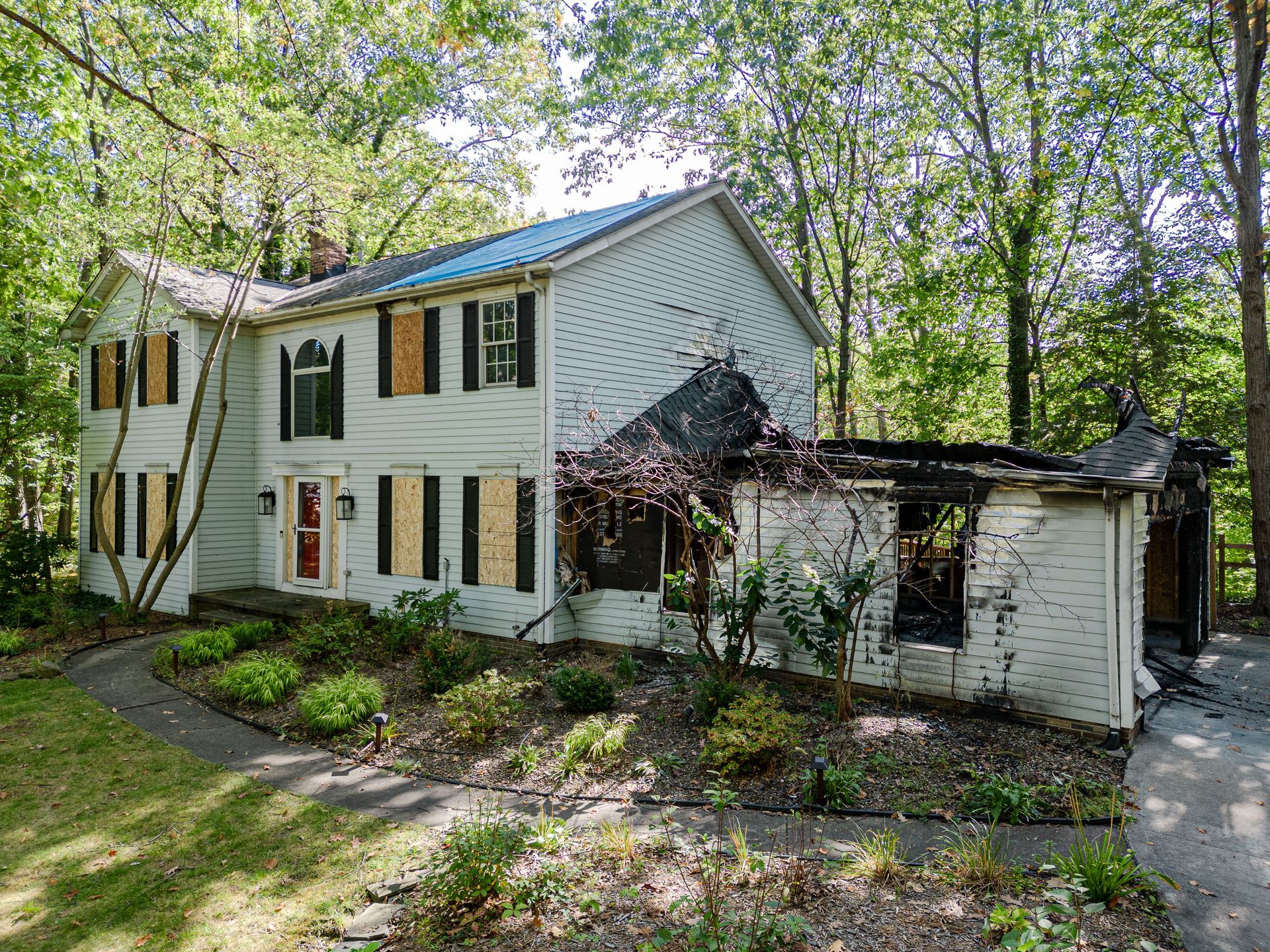
Will Anyone Buy A Burnt House?
Yes. We buy total losses.
Some houses can be fixed. Some can't. If yours can't, that's not bad news. It just means the value is in the land, and every repair quote you've been handed doesn't matter.
Your house may be a teardown if the fire hit the roof beams, the foundation moved, or the cost to rebuild is close to what the house would be worth after.
If you can't afford to tear it down, tell us. That is not a reason we say no.
What The Fire Department Did To Your House
Most people don't expect this part.
1 in 5 houses we buy has a hole cut in the roof by the fire department. They also break walls to find fire hiding inside them, and the water they use soaks the floors.
None of that is their fault. It's how you stop a fire. But it means the damage is almost always bigger than what you can see from the street.
One more thing that surprises people: more fires start in the garage than in the kitchen. We've looked at 186 of them.
Do I Have To Tell Buyers About The Fire?
Usually yes. Texas law (Texas Property Code Section 5.008) says you must fill out a Seller's Disclosure Notice, and the fire goes on it. Selling as-is does not change that.
But some sales are exempt. That includes:
Homes sold by an executor handling someone's estate
Homes sold through a court order or foreclosure
Homes sold between co-owners, or to a spouse or your own child
If your house is in probate or a trust, the rules may be different for you. Probate in Texas runs through the county court where the person lived, so the county your house sits in sets the pace — Harris County, Dallas County and Tarrant County each move at their own speed. Ask a Texas attorney about your title.
Read the law: Texas Property Code Section 5.008 seller's disclosure.
Does My Insurance Company Have A Deadline?
Yes, and most people don't know it. Texas has a law called the Prompt Payment of Claims Act (Texas Insurance Code Chapter 542).
Your insurance company must:
Say they got your claim and start looking into it — about 15 days
Say yes or no in writing — 15 business days after you send what they asked for
Pay you — about 5 business days after they say yes
If they miss those dates without a good reason, they may owe you 18% interest a year plus your lawyer's fees. Storm-related claims follow slightly different rules under Chapter 542A.
Who Do I Call If My Insurer Stalls?
The Texas Department of Insurance (TDI). They regulate insurance companies in Texas and take complaints. Their help line is 800-252-3439, open 8am to 5pm Central. TDI is also home to the State Fire Marshal's Office.
TDI licenses public adjusters too, so you can check anyone who offers to fight your claim for you: TDI adjuster lookup.
Who Decides What My Burned House Is Worth For Taxes?
Not your insurer, and not us. Your county appraisal district does, and it is separate from your city. That means the Harris Central Appraisal District in Houston, the Dallas Central Appraisal District, the Tarrant Appraisal District in Fort Worth, the Travis Central Appraisal District in Austin, or the Bexar Appraisal District in San Antonio. A burned house may qualify for a lower value, which lowers the taxes
piling up while it sits. Call your district and ask.
One more thing worth knowing: the Texas Real Estate Commission licenses real estate agents and brokers. We are a buyer, not a brokerage. Nobody here earns a commission on your house.
Texas Isn't One Market
What happens after a fire changes depending on where you are.
Gulf Coast
Wet air means mold grows fast. Fire claims can get stuck behind storm claims.
North Texas
Higher home values, faster city permits. Rebuilding makes sense here more often.
Hill Country
Wildfires. We see houses that survived while everything around them burned.
West Texas
Few buyers, few contractors willing to drive out. Houses sit longer here.
East Texas
Older homes, lower values. Rebuild cost often beats what the house would be worth.
Where We Buy In Texas
North of Dallas we've bought in Plano, including a 3,000 square foot home lost the day after the Super Bowl. We've closed in Wylie, and in Flower Mound where values run high enough that rebuilding is worth pricing out before you sell. Allen was a seller who needed to relocate fast. In Lewisville we bought a rental duplex after lightning hit the roof and totalled it. West of that we've closed in Arlington, Grand Prairie and Garland, where one sale had been stuck in probate for five years before we finished it.
On the Houston side we've bought twice in Katy. We've also closed in Sugar Land, where one seller asked us to move at his pace because losing the house had hit him hard, and in Richmond further out along the corridor.
In Central Texas we've bought in Round Rock, north of Austin, and in College Station.
We buy in Fort Worth and across Tarrant County, in Austin and down through San Antonio.
We also work West Texas, where local buyers are hardest to find. We've closed in Lubbock, and we take properties in Midland and Odessa that sit because few contractors will drive out for one job. Same story in El Paso.
In East Texas and along the coast — Tyler, Waco, Beaumont, Corpus Christi — homes are older and worth less, so the rebuild cost often beats what the house would sell for finished. That's when selling the land makes more sense than fixing the house.
Small towns count too. Being far from a big city does not disqualify your house.
How Fast Can I Sell My Fire Damaged House In Texas?
Most people who call us need to sell my fire damaged house fast — their words, not ours. Here are our real numbers:
Most sales: 14 days
Fastest: 1 day
Slowest: 157 days
That slow one was probate. Others are slow because of an old lien, an unfinished estate, or an insurance claim that has to settle first.
None of those make us walk away. We once paid for a lawyer to speed up a Texas probate. We spent months helping find a mortgage payoff from a bank that closed in the 1990s. If your situation is messy, that's the kind we're built for.
I Don't Live In Texas Anymore. Can I Still Sell?
Yes. Half the houses we look at, we look at without the owner there. We send someone, or we work from photos.
Grand Prairie
Four owners — three siblings in three states, and their dad overseas. We got his signature through the U.S. embassy.
Arlington
The owners spoke no English. Their daughter handled it. We went slow so they understood every page. Closed in 3 weeks.
Lewisville
Lightning hit a rental duplex. The owners took the insurance money, sold to us as-is, and moved the cash into their next deal.
Texas People We've Worked With
How To Check Us — And Everyone Else
If you're worried about getting taken advantage of, you should be. Three of our reviewers said they were scared of exactly that.
Ask every buyer these four questions:
How many fire damaged houses have you bought, and when? Ours: 798 worked in 38 states. 10 bought in Texas. Ask them to name the cities.
Will you show proof of funds before I sign? We will. Every time.
Can I talk to someone you bought from? We'll connect you.
Are you buying, or selling my contract to someone else? We buy.
If someone offers you a huge number, be careful, not happy. We've watched sellers get a big promise from a company with no reviews and no track record, then get cut after the inspection.
What Happens Next
Send us the address. Photos help but aren't needed.
A real person calls you, usually within a day.
We look at the house. You don't have to be there.
You get a number within 24 hours.
We close through a title company. You pay nothing.
If it doesn't work, tell us your number.
Fire Damaged Home in Texas? Get a Fair Offer Today
Request a cash offer from Fire Cash Buyer and we'll give you a call to scheduled when we can walk it. Then give you an offer in 24 hours
Contact Us
What Happens Next
Most people who call us need to sell my fire damaged house fast — their words, not ours. Here are our real numbers:
Most sales: 14 days
Fastest: 1 day
Slowest: 157 days
That slow one was probate. Others are slow because of an old lien, an unfinished estate, or an insurance claim that has to settle first.
None of those make us walk away. We once paid for a lawyer to speed up a Texas probate. We spent months helping find a mortgage payoff from a bank that closed in the 1990s. If your situation is messy, that's the kind we're built for.
How To Check Us — And Everyone Else
If you're worried about getting taken advantage of, you should be. Three of our reviewers said they were scared of exactly that.
Ask every buyer these four questions:
How many fire damaged houses have you bought, and when? Ours: 798 worked in 38 states. 10 bought in Texas. Ask them to name the cities.
Will you show proof of funds before I sign? We will. Every time.
Can I talk to someone you bought from? We'll connect you.
Are you buying, or selling my contract to someone else? We buy.
If someone offers you a huge number, be careful, not happy. We've watched sellers get a big promise from a company with no reviews and no track record, then get cut after the inspection.
Who Do I Call If My Insurer Stalls?
The Texas Department of Insurance (TDI). They regulate insurance companies in Texas and take complaints. Their help line is 800-252-3439, open 8am to 5pm Central. TDI is also home to the State Fire Marshal's Office.
TDI licenses public adjusters too, so you can check anyone who offers to fight your claim for you: TDI adjuster lookup.
Who Decides What My Burned House Is Worth For Taxes?
Not your insurer, and not us. Your county appraisal district does, and it is separate from your city. That means the Harris Central Appraisal District in Houston, the Dallas Central Appraisal District, the Tarrant Appraisal District in Fort Worth, the Travis Central Appraisal District in Austin, or the Bexar Appraisal District in San Antonio. A burned house may qualify for a lower value, which lowers the taxes
piling up while it sits. Call your district and ask.
One more thing worth knowing: the Texas Real Estate Commission licenses real estate agents and brokers. We are a buyer, not a brokerage. Nobody here earns a commission on your house.
How to Sell a House with Fire Damage in Texas
April 16, 2025
Joel Efosa
Joel efosa is an experienced NATIONWIDE fire damage real estate investor. As owner of fire cash buyer, my goal is to provide fire victims with more options wether its rehab, sell or financial help.
He’s been featured on multiple publications including
Realtor, Yahoo Finance, Business Insider, Nasdaq, MSN, Fox, Go Banking Rates, Homelight
At Fire Cash Buyer, we promote strict editorial integrity in each of our posts.
Fire Damaged Home in Texas? Get a Fair Offer Today
Request a cash offer from Fire Cash Buyer and we'll give you a call to scheduled when we can walk it. Then give you an offer in 24 hours
Contact Us
Fire damage transforms a valuable Texas property into a complex challenge overnight. The aftermath leaves homeowners exploring a maze of insurance claims, repair estimates, and critical decisions about their property's future.
Texas real estate laws add another layer of complexity, requiring specific disclosures and documentation that can impact the sale process significantly.
A strategic approach to selling fire-damaged property opens multiple paths forward. Professional damage assessments establish a clear baseline for valuation, while market analysis reveals opportunities in Texas's changing real estate environment.
Specialized investors often move quickly on damaged properties, while traditional listings may yield higher returns after strategic repairs.
Success hinges on understanding your options and legal obligations as a Texas property owner. From documenting insurance claims to obtaining necessary safety certifications, each step builds toward a successful transaction.
Market-specific strategies, including targeted
buyer identification and
negotiation approaches, help maximize potential returns even with significant property damage.
Initial Steps After Fire Damage
The immediate aftermath of fire damage demands decisive action to safeguard your property's value and protect your financial interests. A methodical approach during these critical first hours establishes the groundwork for a successful property sale.
Safety and Property Assessment
Before any evaluation begins, obtain explicit clearance from local fire authorities to enter the premises. Once secured, engage a certified structural engineer or building inspector to perform a detailed damage assessment. Their professional evaluation will:
- Identify compromised structural elements
- Evaluate electrical system safety
- Document existing hazards
- Assess overall building integrity
- Provide recommendations for remediation
Insurance Claims Process
Contact your insurance carrier within 24 hours of the fire incident. Establish a systematic approach to managing your claim:
- Record all insurance communications
- Secure your claim number
- Note adjuster contact information
- Track assessment scheduling
- Retain copies of all evaluations
The insurance assessment becomes essential documentation for prospective buyers and directly influences your property's market position.
Documentation Requirements
Develop detailed records of all fire-related damage and subsequent actions:
- Capture detailed photos and video footage
- Create itemized damage inventories
- Preserve fire department incident reports
- Collect contractor repair estimates
- Maintain remediation work records
This thorough documentation serves as crucial evidence for insurance claims while providing essential transparency for potential buyers.
Texas Legal Requirements
Texas property law establishes strict guidelines for selling fire-damaged properties. The Texas Property Code requires explicit disclosure of previous fire damage to prospective buyers. Partner with a real estate attorney familiar with:
- State-specific disclosure requirements
- Property condition documentation
- Safety certification standards
- Seller obligations under Texas law
- Required inspection protocols
Mastering these initial steps creates a solid foundation for marketing your fire-damaged property. Each strategic action strengthens your position with potential buyers while ensuring compliance with legal requirements and protecting your interests throughout the sales process.
Property Evaluation And Market Analysis
Accurate property evaluation and market analysis serve as essential foundations when selling fire-damaged properties. This systematic approach determines both optimal selling strategies and establishes data-driven price expectations aligned with current market conditions.
Professional Damage Assessment
Licensed contractors and structural engineers conduct thorough evaluations to uncover the full scope of fire damage. Their complete assessments include:
- Structural integrity analysis
- Electrical system evaluation
- Plumbing system inspection
- Environmental hazard detection (including asbestos exposure risks)
- Hidden damage identification behind walls and under floors
These detailed evaluations establish precise repair cost estimates, directly influencing the property's market positioning and potential buyer pool.
Current Market Value Analysis
Professional appraisers with specific expertise in distressed properties conduct detailed valuations based on Texas-specific comparable sales data. Their analysis weighs multiple factors:
- Pre-fire property value
- Current post-damage condition
- Recent sales of similar fire-damaged properties
- Location-specific market trends
- Buyer demand patterns in distressed property segments
This thorough method ensures realistic pricing that reflects both market conditions and the property's unique circumstances.
Cost-Benefit Analysis Of Repairs
Strategic repair decisions significantly impact final selling prices. Consider these key elements:
- Essential structural repairs necessary for sale
- Cost estimates from licensed contractors
- Potential value increases from specific improvements
- Market demand for renovated versus as-is properties
- Return on investment calculations for proposed repairs
This analytical approach helps identify which improvements deliver maximum value, supporting informed decisions between as-is sales and strategic renovation investments.
Texas Real Estate Market Conditions
Regional market variations across Texas create distinct opportunities and challenges for distressed property sales. Key market factors include:
- Local buyer demographics and preferences
- Investment activity in specific neighborhoods
- Regional economic indicators
- Property value trends in your area
- Competition from other distressed properties
Understanding these market conditions enables strategic positioning of your property within its specific market segment, leading to more effective pricing and marketing approaches.
This detailed evaluation process equips property owners with crucial insights for making informed decisions about their fire-damaged properties. Each analysis component contributes to developing effective selling strategies that align with both market realities and seller objectives.
Selling Options In Texas
Texas property owners facing the challenge of selling fire-damaged homes have multiple practical pathways forward. Each option balances speed, financial return, and convenience differently, allowing sellers to align their choice with specific circumstances and goals.
Cash Buyers And Investors
Property investors and cash buyers serve a distinct niche in the fire-damaged home market. Their streamlined acquisition process typically includes:
- Same-day property evaluations
- Quick-close offers without repair requirements
- Zero commission fees
- Covered closing costs
- Simplified paperwork handling
While these buyers generally offer below-market prices, they eliminate repair expenses and reduce holding costs through rapid closings. This option proves particularly valuable when time constraints or financial pressures demand immediate action.
Traditional Real Estate Listing
Partnering with agents experienced in distressed properties unlocks strategic advantages in the conventional market. These specialists:
- Target qualified buyers seeking renovation projects
- Utilize market data for optimal pricing
- Stage compelling property presentations
- Explore complex disclosure requirements
- Network with renovation-ready buyers
This approach demands more time but often yields higher sale prices. Success rates increase when sellers can showcase the property's renovation potential or complete strategic repairs that boost market appeal.
Property Auctions
Texas auction platforms create flexible selling environments that combine speed with price optimization potential. Modern auctions offer:
- Both in-person and online bidding options
- Access to national investor networks
- Transparent competition among buyers
- Defined timeline for completion
- As-is sale conditions
The auction format attracts diverse buyers, from individual investors to rehabilitation companies. Digital platforms have expanded geographical reach, intensifying competition for strategically located properties.
Direct Sale Opportunities
Direct sales to end users or boutique developers offer a balanced approach between institutional and traditional routes. This method works particularly well when:
- Property location holds premium value
- Lot characteristics appeal to builders
- Zoning allows profitable redevelopment
- Local market conditions support renovation
- Neighborhood demand remains strong
These transactions often permit more flexible negotiations while maintaining faster closings than conventional listings. Properties in desirable Texas neighborhoods frequently attract direct buyers who value location over current condition.
Each selling avenue presents distinct advantages based on your specific situation. Consider your property's damage extent, current market conditions, and personal timeline when selecting your optimal approach. The right choice balances your immediate needs with long-term financial objectives.
Legal And Disclosure Requirements
Selling a fire-damaged property in Texas demands thorough attention to legal requirements and precise documentation. A thorough understanding of these obligations safeguards all parties while ensuring full compliance with state regulations.
Texas Property Disclosure Laws
Texas state law enforces strict disclosure requirements for property sales, with specific emphasis on fire damage disclosure. The Texas Property Code mandates completion of a detailed Seller's Disclosure Notice that must:
- Document the specific fire incident details
- Outline the full extent of structural and cosmetic damage
- List all completed repairs and remaining issues
- Include ongoing maintenance requirements
The consequences of incomplete or inaccurate disclosure are severe, potentially triggering buyer litigation or contract nullification. This obligation holds true even for as-is sales, where full transparency remains non-negotiable.
Fire Damage Documentation
Professional documentation serves as the cornerstone of a successful fire-damaged property sale. Essential elements include:
- Detailed fire department incident reports
- Professional inspection findings
- High-resolution photographs documenting damage
- Structural engineering assessments
- Repair contractor evaluations
Each document contributes to a detailed property history, establishing credibility with potential buyers and their representatives. Clear, organized documentation demonstrates professional property management and supports informed decision-making throughout the transaction.
Insurance Claim Records
Insurance documentation forms a critical component of the property's historical record. Key materials should include:
- Original claim filings with claim numbers
- Adjuster evaluation reports
- Settlement documentation
- Proof of completed repairs
- Remediation certifications
These records validate the scope of insurance-covered repairs and verify proper handling of damage restoration. Prospective buyers rely on this documentation to understand the property's recovery process and insurance history.
Safety Certifications
Post-fire safety certification represents a crucial final step before market listing. Required documentation typically includes:
- Electrical system safety verification
- Structural integrity certificates
- Municipal code compliance records
- Environmental safety assessments
- Building inspector approvals
Local regulations may mandate additional certifications based on damage severity and repair extent. These documents provide essential assurance to buyers and mortgage lenders regarding property safety and regulatory compliance.
Proper documentation management combined with transparent disclosure practices strengthens the seller's position and expedites transactions. Engagement with Texas real estate law specialists ensures complete compliance and proper documentation throughout the sales process.
Marketing Strategies For Fire-Damaged Properties
Successfully marketing a fire-damaged property in Texas demands a strategic approach balancing potential with transparency. The optimal mix of pricing strategy, visual presentation, targeted buyer outreach, and skilled negotiation directly impacts sale outcomes in the distressed property market.
Pricing Strategies
- Conduct a thorough market analysis of comparable fire-damaged properties in your area
- Calculate the property's pre-damage value minus estimated restoration costs
- Factor in current market conditions and local real estate trends
- Engage professional appraisers with distressed property expertise
The final asking price must reflect both damage extent and the post-rehabilitation value potential. This balanced approach creates compelling opportunities for qualified investors while maintaining realistic market positioning.
Property Presentation
Professional documentation remains essential despite fire damage. Focus on:
- High-quality photos showcasing salvageable features
- Detailed imagery of structural elements that survived the fire
- Complete floor plans with precise measurements
- Location advantages and lot specifications
- Architectural elements with restoration potential
Obtain preliminary renovation estimates from licensed contractors. These concrete figures help potential buyers evaluate the project's scope and visualize the property's future value.
Target Buyer Identification
The most promising prospects for fire-damaged properties typically include:
- Real estate investors specializing in distressed properties
- Renovation contractors seeking project opportunities
- Construction companies with rehabilitation expertise
- Property developers with proven restoration experience
Direct marketing efforts through established
real estate investment networks and industry associations. Partner with agents who maintain strong connections in the
distressed property market and understand rehabilitation project requirements.
Negotiation Tactics
Successful negotiations require:
- Complete documentation of damage assessments
- Detailed insurance claim records
- Multiple contractor renovation estimates
- Clear title documentation
- Structural engineering reports (when applicable)
Position pricing to accommodate renovation costs while preserving investor profit potential. Consider offering:
- Flexible payment terms
- Renovation allowances
- Seller financing options
- Adjustable closing timelines
Maintain open communication about property conditions throughout the negotiation process. Adapt deal structures based on qualified buyer feedback and specific market conditions.
The successful sale of fire-damaged properties requires strategic market positioning and professional execution. Combining accurate pricing, compelling presentation, and targeted buyer outreach maximizes transaction potential in the distressed property market.
Frequently Asked Questions
What is the typical timeline for selling a fire-damaged house in Texas?
The selling timeline varies based on your chosen method and specific circumstances. Cash buyers and investors typically complete purchases within 2-4 weeks, offering the fastest route to closing.
Traditional market listings require more time, often extending several months due to buyer financing requirements and property inspections. Key factors affecting the timeline include damage severity, local market trends, and whether you opt for pre-sale repairs.
How much value does fire damage typically reduce from a property?
Property value reduction correlates directly with damage severity, property location, and current market conditions. Structural damage leads to steeper value drops compared to surface-level damage.
Fire-damaged properties sold as-is typically command 30-60% less than their pre-damage value. This reduction reflects both repair costs and buyer perception of risk. Market conditions in specific Texas neighborhoods can further influence this percentage.
Can I sell my fire-damaged house without making any repairs?
Texas real estate markets offer multiple pathways for selling fire-damaged properties without repairs. Investment buyers and cash-purchase specialists routinely acquire damaged properties as-is.
While this approach yields a lower sale price, it eliminates renovation costs and accelerates the selling process. This solution proves particularly valuable for property owners facing financial constraints or seeking rapid property disposition.
What are the minimum disclosure requirements in Texas?
Texas property law mandates detailed disclosure of fire damage history. Sellers must complete a Seller's Disclosure Notice documenting the fire incident, damage extent, and completed repairs.
Required documentation includes insurance claim records, repair estimates, and professional damage assessments. The disclosure package must detail both obvious and latent damage-related issues. Legal consequences await sellers who fail to disclose fire damage history.
How do insurance claims affect the selling process?
Insurance claims significantly impact property transactions. Lenders and buyers require detailed claim histories, settlement information, and repair documentation.
Unresolved claims can delay or derail sales, making claim resolution crucial before market listing. Maintain thorough records of insurance communications, settlement details, and completed repairs. This documentation builds buyer confidence and streamlines the transaction process.
💡 Conclusion
Successfully selling a fire-damaged house in Texas demands a strategic, well-documented approach. Property owners who thoroughly document damage assessments, insurance claims, and repair records create a stronger position during negotiations.
The decision between pre-sale repairs and as-is selling hinges on several key factors:
- Current market conditions
- Property's extent of damage
- Available financial resources
- Urgency of the sale
- Local real estate trends
Texas homeowners can pursue multiple viable paths:
- Traditional real estate listings with full disclosure
- Direct sales to real estate investors
- Auction platforms specializing in damaged properties
- Cash buyers focusing on distressed homes
Success in this challenging market requires strict adherence to legal obligations, particularly Texas's disclosure requirements. Working with qualified professionals—from certified inspectors to experienced real estate agents—proves essential for handling complex transactions involving fire-damaged properties.
The optimal selling strategy aligns your specific circumstances with market realities. Whether opting for a quick cash sale or investing in strategic repairs to maximize market value, success stems from data-driven decisions and professional guidance.
This measured approach helps ensure both legal compliance and optimal financial outcomes in what can otherwise be an overwhelming situation.